The first serious mainstream biography of Mary Kay Ash landed this week, and the direct selling industry should be paying attention.
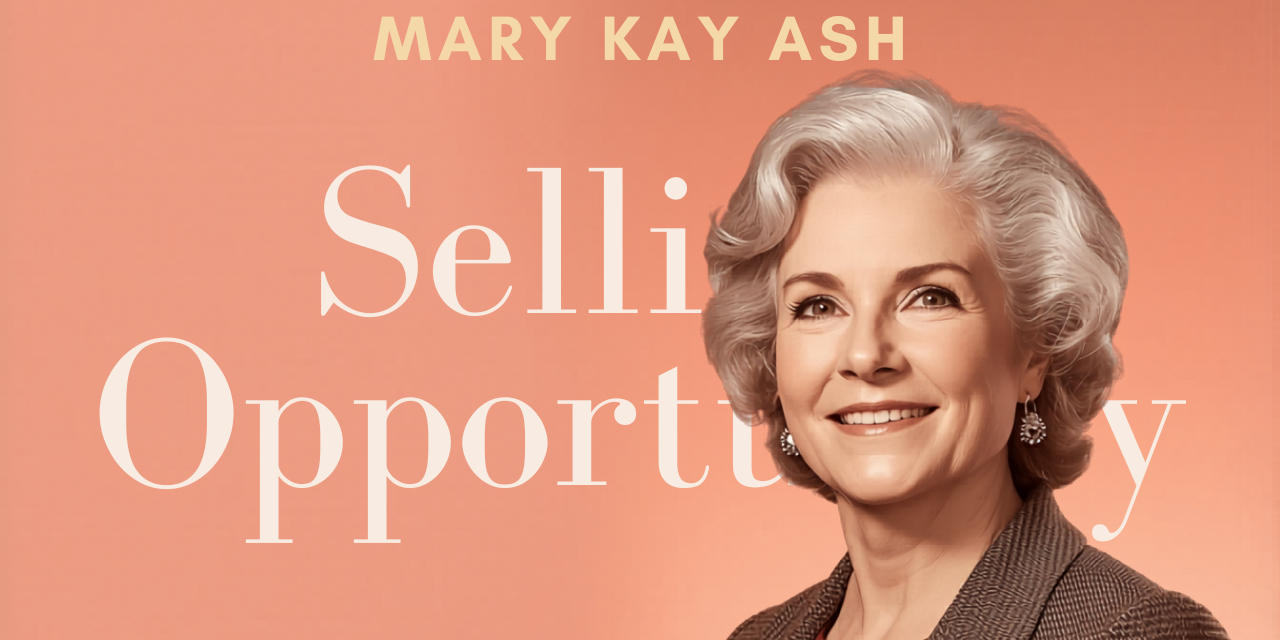
“Selling Opportunity: The Story of Mary Kay,” written by Mary Lisa Gavenas and published by Viking/Penguin Random House, went on sale April 28, 2026. Gavenas is a former senior editor at Glamour and columnist for Elle who spent fifteen years researching the book. The result is the most comprehensive account ever written of how a Depression-era girl from Houston’s Sixth Ward built one of the most recognizable direct selling companies in the world.
This is not a trade publication book review. This is a mainstream literary event, and the reception has matched that description.
The Credentials Are Real
The book landed on Lit Hub’s Most Anticipated Books of 2026 list before it was even published. Town and Country named it one of the 48 Must-Read Books of Spring 2026. Publishers Weekly gave it a starred review, calling it a brilliant biography that takes seriously the groundbreaking nature of Mary Kay Ash’s endeavor. The Wall Street Journal covered it. D Magazine ran an exclusive excerpt.
That is not the typical press release circuit that most direct selling news travels through. This book is reaching readers who have never attended a Mary Kay party, never thought about direct selling as a career, and may only know the pink Cadillac as a cultural punchline. For those readers, “Selling Opportunity” is going to be their first serious introduction to what the industry actually is and where it came from.
The Story Gavenas Tells
Mary Kay Ash was born Mary Kathlyn Wagner in 1918 in rural Texas. She married at sixteen and was a grandmother at thirty-four. She spent years selling cleaning products door to door with no salary and no security, watching men she had trained get promoted over her repeatedly. When she finally founded Mary Kay Cosmetics in 1963 at age 45, she had been divorced three times and widowed twice, and she was starting from a 500-square-foot Dallas storefront with a $5,000 investment.
What she built from that starting point is one of the great American business stories of the twentieth century. Mary Kay Inc. grew into a global operation with 3.5 million representatives in over 35 countries. Ash became the only woman named in Forbes’ Greatest Business Stories of All Time and the first woman to chair a company on the New York Stock Exchange.
Gavenas traces how Ash’s own experience being passed over and underpaid in a male-dominated sales world directly shaped everything about how she built her company. The rewards structure, the recognition culture, the pink Cadillacs, the emphasis on making every consultant feel seen and valued, none of that was accidental. It was the deliberate construction of a woman who knew exactly what it felt like to be invisible in a business environment and decided to build something different.
What the Book Gets Right
The biography takes the business seriously. That alone separates it from most mainstream writing about the direct selling industry, which tends to lead with skepticism and work backward. Gavenas did fifteen years of research, conducted rare interviews, and built an argument that Mary Kay Ash deserves to be understood as a genuine business innovator who standardized and expanded the direct sales industry’s tiered rewards structure at a time when women had almost no other path to serious economic participation.
The book also does not sanitize the era. The direct selling landscape Ash navigated was full of what one blurb writer called hucksters and charlatans. Ash was not operating in a clean industry. She was operating in a chaotic one, and the fact that what she built has lasted more than sixty years says something about the difference between a company built on real product value and real human connection versus one built on hype.
Where It Gets Complicated
Not every review has been entirely uncritical. One reviewer noted that while Gavenas acknowledges the well-documented gap between what a small number of top earners make and what the average consultant actually earns, the book generally tells the story through a favorable lens. That is an honest observation and worth sitting with.
The income disparity question in direct selling did not start with Mary Kay and it has not been resolved since. The book’s value is not in pretending that tension does not exist. It is in providing the historical context to understand how the industry developed the way it did, and why the promise at the center of it, the idea that any woman willing to work hard enough could build something of her own, was so powerful and so complicated at the same time.
Why This Matters Now
The direct selling industry is navigating a difficult regulatory environment in 2026, with ongoing FTC scrutiny and a public conversation that has not always been kind to the channel. A serious, well-researched biography that treats the founder of one of the industry’s most iconic companies as a legitimate subject of American business history is a useful counterweight to that narrative.
Mary Kay Ash built something real. She did it against obstacles that most people today would find difficult to imagine. And she built it in a way that gave millions of women access to economic opportunity they could not find anywhere else at the time.
That story deserves to be told well. From everything the early reviews indicate, Gavenas has done exactly that.
“Selling Opportunity: The Story of Mary Kay” is available now wherever books are sold. If you have any connection to the direct selling industry, it belongs on your shelf.